


Pooled Procurement vs GPO: What Is Different for Indian Hospitals
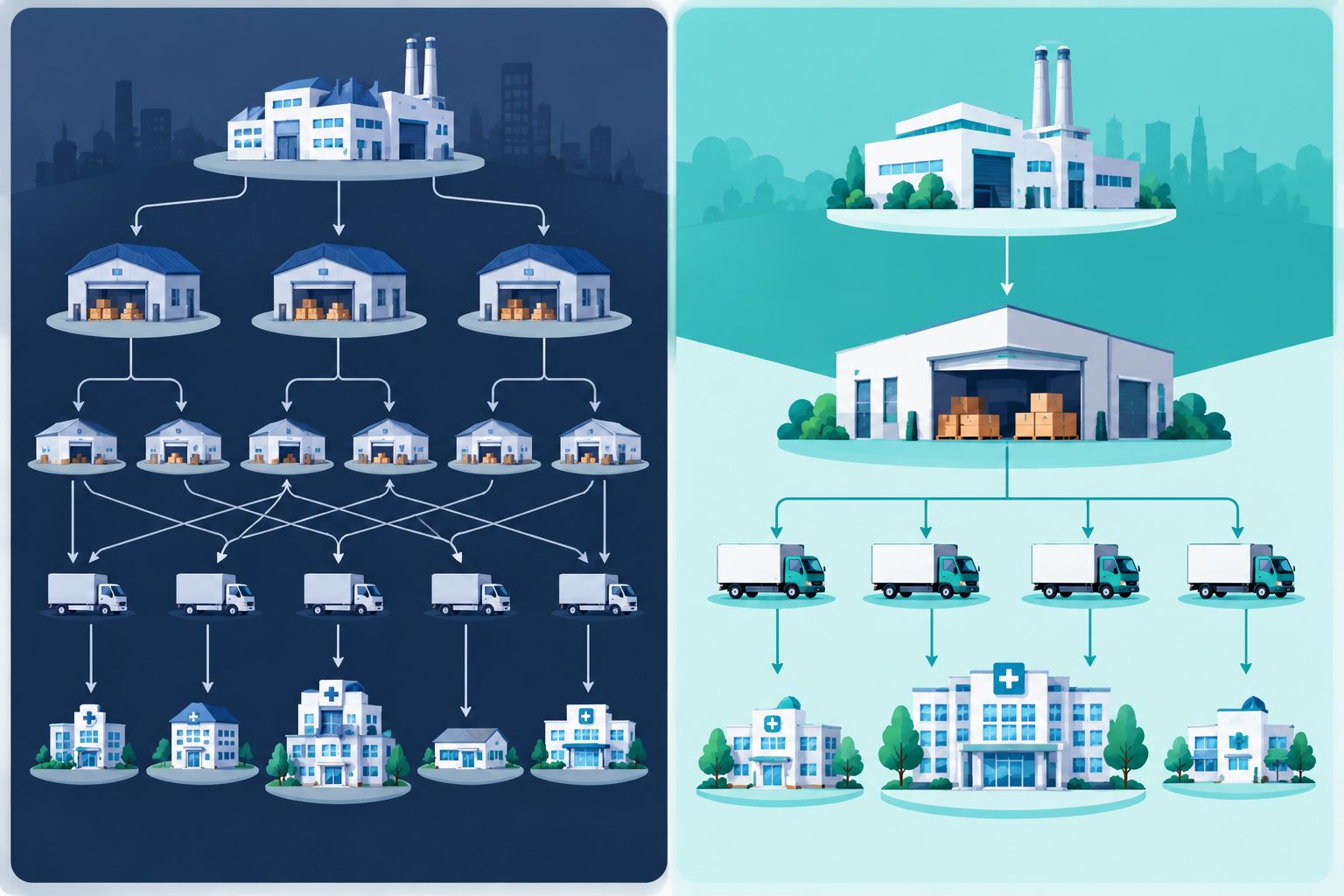
How does H.O.P.E.’s pooled procurement model differ from a traditional GPO? Compare scale, ordering cycle and commitment before you decide.
A traditional Group Purchasing Organisation typically delivers cost savings in the range of 10 to 18 percent for its member institutions, according to industry research, but that model is built around large hospital chains with the order volume and administrative capacity to use it. H.O.P.E.'s pooled procurement model shares the core idea of combining purchasing volume, but it is structured specifically for the standalone Tier 2 and Tier 3 facility a traditional GPO rarely reaches. This guide explains exactly how the two models differ, and why the difference matters most for the hospitals a conventional GPO was never really designed to serve.
Key Takeaways
- A traditional GPO model is typically built around large hospital chains negotiating collectively with national suppliers, delivering an estimated 10 to 18 percent in savings industry-wide.
- H.O.P.E.'s pooled procurement model is built specifically for standalone Tier 2 and Tier 3 facilities that a traditional GPO structure was not designed to serve at meaningful scale.
- The practical differences show up in minimum scale requirements, ordering cycle, and how easy it is to join without switching every vendor at once.
- A rigid shipping schedule is a common limitation of traditional GPO structures for smaller facilities with limited storage capacity, a problem H.O.P.E.'s weekly cycle is built to avoid.
What a Traditional GPO Looks Like
A group purchasing organisation typically negotiates contracts on behalf of member hospitals with a defined set of suppliers, leveraging the combined purchasing power of its membership, usually large hospital systems and chains, to secure pricing no individual facility could obtain on its own. In healthcare specifically, this model has delivered real, measurable value at scale. The Healthcare Supply Chain Association has reported that GPOs help the broader industry save tens of billions of dollars annually in markets where the model is well established, and independent research has found savings in the range of 10 to 18 percent for participating institutions compared to negotiating independently.
This model works well at scale, but it generally assumes a level of order volume and administrative capacity that a standalone 30 to 100-bed hospital does not have on its own. A traditional GPO membership can also come with structural trade-offs that matter more to a smaller facility: rigid shipping schedules that assume a certain minimum order size, long-term contract commitments that reduce flexibility, and administrative overhead in tracking contract compliance that a small facility's limited staff may struggle to manage well. This combination is why Tier 2 and Tier 3 facilities are rarely the primary audience most GPO structures are actually designed around, even where nothing formally excludes them from joining.
Where H.O.P.E.'s Model Differs
Built for the hospital a traditional GPO was not designed for
H.O.P.E. starts from the standalone Tier 2 or Tier 3 facility and pools exactly the volume that facility generates, alongside similar hospitals, clinics, labs, pharmacies, maternity centres and dental practices across Rajasthan. Rather than requiring a facility to already generate enough volume to be an attractive GPO member, the model is built around aggregating many smaller facilities' volume into something that collectively matches or exceeds what a single large hospital chain could negotiate on its own. Our guide to what pooled procurement actually is explains this mechanism in full.
A fixed weekly cycle, not a long-term bulk contract
Rather than a long-term negotiated supply contract typical of larger GPO structures, which often assumes a minimum order size and a fixed delivery schedule that can strain a smaller facility's storage capacity, H.O.P.E. runs on a simple, fixed weekly cycle: order by Friday, receive by Monday. This avoids the rigid shipping schedule problem that research on traditional GPOs has identified as a genuine burden for smaller, independent operations with limited storage and capital. Our guide on how the weekly ordering cycle works explains this fully.
No requirement to switch every vendor at once
Many GPO relationships assume a broad commitment across categories, sometimes with contractual minimums that effectively require a facility to route most of its purchasing through the GPO's negotiated suppliers. H.O.P.E. allows a hospital to move specific categories to the pooled network while keeping other vendor relationships in place, lowering the barrier to actually joining and letting a facility test the model on a smaller scale before committing more broadly.
A free audit before any commitment
Rather than asking a hospital to commit before seeing a number, which is the more typical path for joining a traditional GPO, H.O.P.E. offers a free 100-SKU procurement audit first. Our procurement audit checklist guide covers exactly what this involves and what to prepare before applying.
A Side-by-Side Comparison
| Factor | Traditional GPO | H.O.P.E. Pooled Procurement |
|---|---|---|
| Typical membership | Large hospital chains and systems | Standalone Tier 2/Tier 3 hospitals, clinics, labs, pharmacies, maternity centres and dental practices |
| Ordering cycle | Longer-term bulk contracts | Fixed weekly cycle, order Friday, deliver Monday |
| Commitment required to join | Often broad commitment across categories | Category-by-category, no requirement to switch every vendor |
| Evaluation before joining | Varies, often limited upfront visibility | Free 100-SKU procurement audit before any commitment |
| Typical reported savings | 10-18 percent industry-wide (large institutions) | Varies by facility and category, benchmarked directly in the free audit |
Why This Distinction Matters for a Rajasthan Hospital
If you have looked into group purchasing before and concluded it was not built for a facility your size, that conclusion was likely correct for the traditional GPO model you were evaluating at the time. It does not mean pooled buying cannot work for your hospital, it means the specific structure needs to match your scale and operational constraints. Our explainer on why Tier 2 hospitals typically pay more for consumables covers the underlying volume problem both models are trying to solve, just through structurally different approaches suited to different kinds of member institutions.
What a Rigid Shipping Schedule Actually Costs a Smaller Facility
It is worth being specific about why a rigid, large-volume shipping schedule is a genuine problem for a smaller facility, not just an inconvenience. A traditional GPO contract that assumes bulk shipments on a monthly or quarterly schedule requires storage capacity a smaller facility often does not have, and ties up working capital in inventory that depletes slowly rather than being replenished on a cycle matched to actual usage. A facility forced into this pattern either overpays for storage infrastructure it would not otherwise need, or accepts stock levels that swing between excess and near-depletion in a way a smaller, more frequent ordering cycle avoids entirely. This is precisely the structural mismatch H.O.P.E.'s weekly cycle is designed around, aggregating volume for pricing purposes while still delivering at a frequency that matches a smaller facility's actual storage and cash flow reality.
Administrative Overhead: The Hidden Cost of a Traditional GPO for a Small Facility
Beyond the shipping schedule issue, a traditional GPO membership typically requires ongoing administrative attention that a small facility's lean staff structure is not well positioned to provide. Tracking contract compliance, ensuring purchases are routed through the correct negotiated supplier to actually realise the negotiated rate, managing periodic contract renewals and renegotiations, and auditing invoices against contract terms are all real tasks that larger hospital systems typically have dedicated procurement staff to handle. A standalone nursing home or small hospital attempting the same tasks with existing administrative staff, who are already managing several other responsibilities, often ends up either under-utilising the GPO relationship, missing some of the negotiated savings because purchases were not properly routed, or absorbing a disproportionate administrative burden relative to the facility's size. A simpler weekly ordering cycle against a known rate card avoids most of this overhead by design, since there is no separate contract compliance process to manage beyond simply placing the order each week.
How to Evaluate Whether Pooled Procurement Is Right for Your Facility
Rather than assuming either a traditional GPO or a pooled procurement model is automatically right for your situation, a more useful approach is evaluating your own facility against the specific factors that determine fit. Consider your current order volume relative to what a traditional GPO's minimum requirements typically assume, since this is usually where the mismatch becomes clearest for a smaller facility. Consider your storage capacity and cash flow pattern, since a rigid bulk shipping schedule strains both in ways a weekly cycle does not. And consider your administrative capacity to manage an ongoing contract relationship, since this overhead is real even when the negotiated rates themselves are genuinely favourable. A facility that finds itself consistently falling short of traditional GPO minimums, or struggling with the administrative side of such a relationship, is typically a strong fit for a model built specifically around smaller, standalone operations.
Frequently Asked Questions
Is H.O.P.E. a group purchasing organisation?
H.O.P.E. shares the core idea of combining purchasing volume across members, but it is structured specifically for standalone Tier 2 and Tier 3 hospitals on a weekly ordering cycle, rather than the longer-term bulk contract structure typical of traditional GPOs.
Why have I not found a GPO that works for my hospital's size before?
Most traditional GPO structures are built around the scale and administrative capacity of large hospital chains. A standalone facility often does not generate enough volume or have the dedicated procurement staff that structure assumes, which is the specific gap H.O.P.E. is built to close.
Do I need to commit before seeing any savings estimate?
No. H.O.P.E.'s free 100-SKU procurement audit benchmarks your current spend before you decide anything, which is different from committing to a contract upfront and hoping the numbers work out once you are already locked in.
Does a traditional GPO's 10 to 18 percent savings figure apply to smaller Indian hospitals too?
That figure comes from research on institutions generally large enough to meet typical GPO membership requirements, which most standalone Tier 2 and Tier 3 facilities are not. H.O.P.E.'s model is built to deliver a comparable pooled-volume benefit specifically for facilities below that scale, benchmarked directly through the free audit rather than assumed from a general industry figure.
What happens if my facility's order volume changes significantly after joining?
Since H.O.P.E.'s model operates on a weekly ordering cycle rather than a long-term fixed contract, a facility's order volume can adjust week to week as its actual needs change, without the renegotiation process a shift in volume might require under a traditional GPO contract.
Does my facility need dedicated procurement staff to benefit from pooled procurement?
No, this is one of the specific advantages over a traditional GPO relationship. A simple weekly ordering cycle against a known rate card does not require the ongoing contract compliance tracking and administrative management that a traditional GPO membership typically does, making it accessible to facilities without a dedicated procurement team.
Can a facility outgrow a pooled procurement model and need a traditional GPO instead?
It is possible for a facility to eventually reach a scale where a direct, large-volume contract negotiation becomes more advantageous, but this threshold is considerably higher than most Tier 2 and Tier 3 facilities operate at. Reassessing periodically as your facility grows is reasonable, but it is not a transition most member hospitals are likely to need in the near term.
Looking for medical supplies in bulk?
Explore 5,000+ verified consumables with transparent GPO pricing on HOSPkart.
Related Articles
More insights on hospital procurement & supply chain optimization
 Procurement Guide
Hospital Consumables Supplier in Jodhpur and Western Rajasthan
Thinner vendor markets in Jodhpur, Barmer, Jaisalmer and Pali mean less pricing pressure, not more. See how pooled procurement changes that.
 Procurement Guide
Gloves, Syringes and IV Sets: How to Check if You Are Overpaying
Is your hospital overpaying for gloves, syringes and IV sets? Here’s how to benchmark your current pricing against an actual institutional rate card.
 Procurement Guide
Par Level Inventory for Hospitals: Setting Minimum Stock for Consumables
Learn the par level formula for hospital consumables, average usage plus safety stock divided by delivery frequency, with a worked example.
