


Hospital Consumables Supplier in Jodhpur and Western Rajasthan
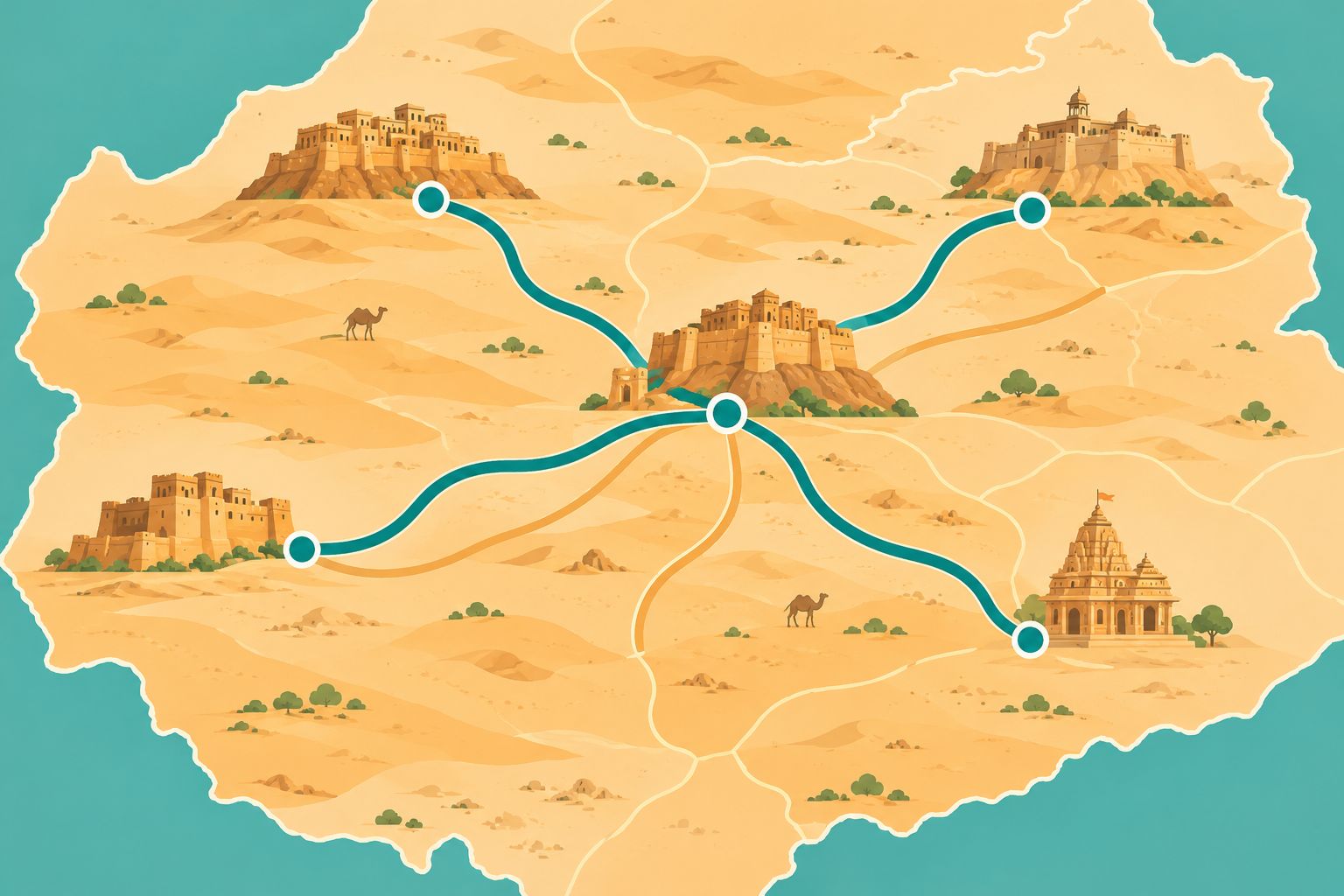
Thinner vendor markets in Jodhpur, Barmer, Jaisalmer and Pali mean less pricing pressure, not more. See how pooled procurement changes that.
A thinner vendor market in western Rajasthan usually means less pricing pressure on the few suppliers available, not more, which is the opposite of what many hospitals in this region assume. Jodhpur anchors a wide stretch of western Rajasthan, Barmer, Jaisalmer, Pali and Nagaur among it, where hospitals and nursing homes face the same consumables supply pattern seen across the state: scattered local vendors, reactive ordering, and pricing that has never been properly benchmarked against what a pooled network can actually offer.
Key Takeaways
- Western Rajasthan's hospital market is spread across a wide geography, with Jodhpur as its natural regional hub for service and delivery coordination.
- Distance from Jaipur and other supply centres often means fewer vendor options for Jodhpur-area facilities, not more pricing leverage, which is a common and costly misconception.
- H.O.P.E.'s pooled network combines orders across this region to reach pricing no single facility can negotiate alone, regardless of how thin the local vendor market is.
Why Distance Works Against Jodhpur-Area Hospitals, Not For Them
It is a common assumption that fewer local vendors means less competition and therefore better deals for whichever supplier does serve the area, since that supplier presumably has to work harder to earn and keep your business. In practice, a thinner vendor market in western Rajasthan usually means less pricing pressure on the few suppliers available, not more, since a vendor facing little local competition has less incentive to offer aggressive pricing to keep your business when there is nowhere else nearby for you to easily take it. Longer logistics distances from major supply centres like Jaipur or Delhi can add further cost on top of this reduced competitive pressure. Our explainer on why Tier 2 hospitals pay more for consumables than metro chains covers the volume-driven root of this gap, which applies with added force in a geographically spread-out region like western Rajasthan.
How Pooled Procurement Changes This for Western Rajasthan
Rather than each Jodhpur-area facility negotiating alone against a limited local vendor pool, H.O.P.E. combines the weekly orders of member hospitals, clinics, labs, pharmacies, maternity centres and dental practices across this region into one order against the network's negotiated rate card. This pooling mechanism means a facility's effective negotiating position is no longer limited by how many local vendors happen to operate near it, but by the combined volume of the entire network's membership across Rajasthan. Our guide on what pooled procurement actually is explains the mechanism, and the fixed Friday-to-Monday weekly cycle applies the same way here as anywhere else in the network, with no separate or disadvantaged terms for western Rajasthan members.
Jodhpur as a Regional Anchor
As the largest city in this part of Rajasthan, Jodhpur serves as a natural coordination point for delivery and service across the wider western region, Barmer, Jaisalmer, Pali and Nagaur included. This mirrors the role Kota plays for the Hadoti belt and Jaipur for the eastern districts, a hub city anchoring pooled service across a wider catchment area rather than each smaller town needing its own entirely separate supply arrangement. This regional hub model is part of what makes consistent weekly delivery practical across a geographically large and comparatively sparsely served region like western Rajasthan, where a supplier with no genuine regional presence would struggle to offer reliable service at all.
Checking Your Own Numbers First
Before changing anything, a Jodhpur-area hospital can request a free 100-SKU procurement audit to see a direct comparison between current spend and institutional pricing, using actual figures from recent purchasing rather than a general assumption about what a pooled model might save. Our procurement audit checklist guide covers what to prepare for this, and the process requires no commitment before you see the result.
Why Western Rajasthan Hospitals Are Often the Most Underserved by Pricing Competition
Of the various regions H.O.P.E. serves across Rajasthan, the western belt around Jodhpur, Barmer, Jaisalmer and Nagaur is often among the most structurally disadvantaged when it comes to natural market pricing competition, simply due to the combination of geographic spread and lower population density relative to the eastern and southern parts of the state. This is not a criticism of the region, it is a structural observation about how vendor competition tends to concentrate around denser population centres regardless of which state or country you look at. For exactly this reason, a pooled model that does not depend on local vendor density to deliver fair pricing offers a proportionally larger benefit to facilities in this specific belt than it might in a market like Jaipur, where some degree of natural local competition already exists even without pooling.
Addressing Delivery Concerns Across a Wide Geographic Belt
A reasonable question for a facility in Barmer or Jaisalmer, further from Jodhpur itself than a facility within the city, is whether a pooled network can realistically maintain its weekly delivery promise across such a wide area. The honest answer is that delivery timing within the weekly window can vary somewhat by exact distance from the regional hub, and confirming the specific expected delivery timing for your exact location before applying is a reasonable step, rather than assuming identical timing to a Jodhpur city-based facility. The core weekly cycle and pricing benefit apply uniformly across the region, even if the precise hour or day within that window shifts slightly by distance from Jodhpur.
A Note on Distance-Related Freight Cost Within Consumables Pricing
Buyers in this region sometimes assume that distance from major supply hubs automatically means a pooled network's pricing advantage is partly eaten up by added freight cost once goods are actually dispatched to western Rajasthan. This is worth addressing directly rather than leaving as an assumption. A network's negotiated rate card already reflects its actual operational cost of serving its full membership geography, including the distances involved in reaching a regional hub like Jodhpur and distributing from there to the surrounding belt. The institutional rate quoted to a member facility is the figure that matters, not a theoretical breakdown of how much of that figure reflects product cost versus logistics, since the comparison that counts is your actual cost under the pooled model against your actual cost under your current local arrangement.
Combining Equipment and Consumables Planning Across the Region
Many western Rajasthan hospitals face parallel sourcing challenges for both equipment and recurring consumables, given the same underlying distance and thin-market dynamics affecting both categories. While this guide focuses specifically on consumables, our sister platform HOSPkart addresses the equivalent equipment-purchasing challenge for the same region, including its own guide on medical equipment suppliers in Jodhpur. A facility planning both equipment upgrades and ongoing consumables procurement may find it useful to think through both challenges together, even though the specific mechanisms, verification for equipment, pooled volume for consumables, differ meaningfully between the two.
Frequently Asked Questions
Does the network's delivery actually reach Barmer, Jaisalmer, Pali and Nagaur, or only Jodhpur city?
Jodhpur acts as the regional anchor point for this wider belt. Confirm current delivery coverage for your specific town directly before applying, since coverage can expand over time.
Will a smaller local vendor market mean I get a worse deal from pooled procurement too?
No, because pooled procurement pricing is set by the network's combined order volume across all its members, not by how many local vendors operate near any individual facility. A thin local market does not limit the pooled pricing benefit the way it limits traditional local vendor negotiation.
How is this different from just asking my current Jodhpur vendor for a better rate?
A single hospital's order volume rarely gives it meaningful negotiating leverage with any individual vendor, particularly in a market with limited competition pressuring that vendor to offer a better rate. Pooling that volume with other member facilities is what actually shifts the pricing conversation in a way an individual negotiation attempt generally cannot.
Does delivery timing vary for facilities further from Jodhpur within the same weekly cycle?
It can vary somewhat by distance from the regional hub, though the core Friday-to-Monday cycle applies across the belt. Confirming the specific expected timing for your exact location before applying is a reasonable step for facilities further from Jodhpur city itself.
Does freight cost from Jaipur or Jodhpur to a more distant town like Barmer reduce the pooled pricing benefit?
The institutional rate quoted to a member facility already reflects the network's actual operational cost of serving its full membership geography. What matters for your decision is the comparison between that quoted rate and your current local pricing, not a theoretical breakdown of how the rate is composed.
Should a western Rajasthan facility handle equipment and consumables sourcing through the same process?
They involve different mechanisms, verification and service coverage for equipment purchasing, pooled order volume for consumables, so they are generally best approached as related but separate sourcing decisions, even when planned together as part of a facility's broader procurement strategy.
What Joining Looks Like for a First-Time Western Rajasthan Applicant
A facility in this belt applying for the first time typically starts with the free procurement audit, sharing recent purchasing figures for a sample of its consumables categories, rather than committing to anything before seeing a direct comparison. Once the audit shows where the clearest gaps sit, most Jodhpur-area facilities begin by moving just one or two of their highest-volume categories to the weekly pooled cycle, keeping other vendor relationships in place for the remainder, and expand gradually as the model proves itself against their own real numbers rather than a general promise made before any actual ordering has taken place.
Looking for medical supplies in bulk?
Explore 5,000+ verified consumables with transparent GPO pricing on HOSPkart.
Related Articles
More insights on hospital procurement & supply chain optimization
 Procurement Guide
Gloves, Syringes and IV Sets: How to Check if You Are Overpaying
Is your hospital overpaying for gloves, syringes and IV sets? Here’s how to benchmark your current pricing against an actual institutional rate card.
 Procurement Guide
Par Level Inventory for Hospitals: Setting Minimum Stock for Consumables
Learn the par level formula for hospital consumables, average usage plus safety stock divided by delivery frequency, with a worked example.
 Procurement Guide
Panic Buying in Hospitals: The Hidden Cost of Emergency Orders
Emergency consumables orders are priced for urgency, not value. See how panic buying quietly inflates your hospital’s annual supply cost.
