


Why Tier 2 Hospitals Pay More for Consumables | H.O.P.E.
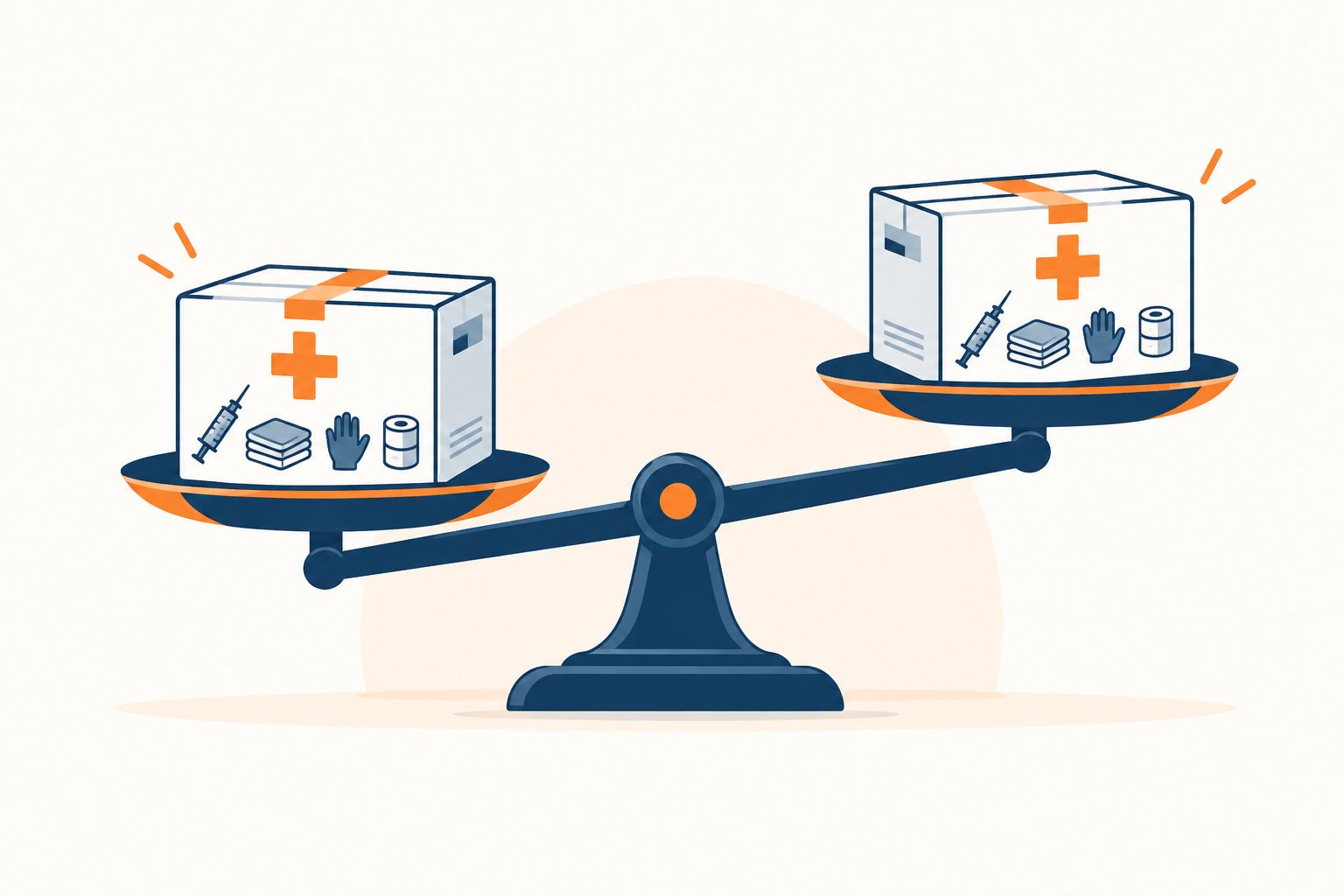
Tier 2 and Tier 3 hospitals pay 30 to 40% more for consumables than metro chains. Here's why, and how pooled buying closes the gap.
Ask a procurement manager at a large metro hospital chain and a hospital owner running a 40-bed facility in a Tier 2 town what they pay for the same box of IV sets, and the gap is rarely small. It is not an accident of geography. It is the direct, measurable result of how each of them buys.
This is the gap H.O.P.E. exists to close, and this guide explains exactly why it happens before we get into how pooled procurement fixes it.
Key Takeaways
- Tier 2 and Tier 3 hospitals in India commonly pay 30 to 40 percent more for the same consumables than large metro hospital chains pay for identical items.
- The gap is driven by order volume and ordering frequency, not by location, quality, or negotiating skill.
- Metro chains negotiate rate-card pricing because their order volume gives them leverage a standalone hospital cannot generate alone.
- Pooling order volume across a network of similar hospitals is the only practical way to close this gap without merging ownership or changing vendors overnight.
The Same Product, a Different Price
A box of surgical gloves, a pack of syringes, a set of IV lines, these are largely standardised products. The manufacturing cost does not change meaningfully based on which hospital eventually buys them. What changes is the price the distributor is willing to offer, and that price is set almost entirely by how much volume the buyer represents and how consistently they order it.
A metro hospital chain running several facilities places large, frequent, predictable orders. A distributor can plan production and logistics around that volume, which is exactly what earns rate-card pricing. A standalone Tier 2 or Tier 3 hospital orders in smaller batches, often reactively when stock runs low, which is the least favourable buying pattern a distributor sees.
Three Reasons the Gap Is Structural, Not Circumstantial
1. Order volume sets the rate card, not the hospital's size alone
A distributor's pricing tiers are built around total order volume across a relationship, not the size of any single facility. A 40-bed hospital ordering alone will almost never reach the volume tier a metro chain reaches across its network, no matter how well it negotiates a single conversation.
2. Reactive ordering costs more than planned ordering
A hospital that orders whenever stock visibly runs low is buying under time pressure, and time pressure removes negotiating room entirely. Our guide on panic buying and the hidden cost of emergency orders looks at exactly how much this reactive pattern costs over a year.
3. Fragmented vendors mean fragmented leverage
Many Tier 2 and Tier 3 hospitals split their consumables order across several local vendors, sometimes for good reasons like service relationships or partial availability. But splitting volume across vendors also splits whatever negotiating leverage that volume could have created with any single one of them.
What This Actually Costs Over a Year
A 30 to 40 percent difference sounds abstract until it is applied to an actual annual consumables spend. For a mid-size hospital, that gap is frequently the equivalent of one additional piece of major equipment every year, money that is currently leaving the hospital through its procurement line rather than being available for anything else. Our guide to pooled procurement explains the mechanism that closes this specific gap.
Why Individual Negotiation Cannot Close This Gap Alone
This is worth stating plainly: a hospital owner who negotiates well is not the problem, and better negotiating alone cannot solve a volume problem. The rate card a distributor offers is set by total committed volume, and a single Tier 2 or Tier 3 hospital, however well it negotiates, is negotiating against a volume ceiling it cannot raise on its own. The only way to change the number being negotiated against is to combine that hospital's volume with others', which is the entire premise behind pooled procurement.
Frequently Asked Questions
Is the 30 to 40 percent gap the same for every consumable category?
No, the gap varies by product category and by region. It is a commonly cited range across the sector rather than a fixed figure for every item, and it is worth benchmarking your own actual spend rather than assuming the exact percentage applies uniformly across your full consumables list.
Can a single hospital close this gap by switching vendors?
Switching vendors alone rarely closes the gap, because the new vendor still prices against the hospital's own order volume. The gap is closed by increasing the volume being priced against, which is what pooling across a network of hospitals achieves.
Does hospital location affect how much more a Tier 2 hospital pays?
Location affects freight and service cost, but the core price gap comes from order volume and frequency, not distance alone. A Tier 2 hospital close to a metro city can still face the same volume-driven pricing gap as one further away.
How does H.O.P.E. address this specific problem?
H.O.P.E. pools the weekly consumables orders of its member hospitals into one combined order, so the rate negotiated reflects the network's total volume rather than any single hospital's order size. This is explained in full in our guide to what pooled procurement actually is.
Looking for medical supplies in bulk?
Explore 5,000+ verified consumables with transparent GPO pricing on HOSPkart.
Related Articles
More insights on hospital procurement & supply chain optimization
 Procurement Guide
Hospital Consumables Supplier in Jodhpur and Western Rajasthan
Thinner vendor markets in Jodhpur, Barmer, Jaisalmer and Pali mean less pricing pressure, not more. See how pooled procurement changes that.
 Procurement Guide
Gloves, Syringes and IV Sets: How to Check if You Are Overpaying
Is your hospital overpaying for gloves, syringes and IV sets? Here’s how to benchmark your current pricing against an actual institutional rate card.
 Procurement Guide
Par Level Inventory for Hospitals: Setting Minimum Stock for Consumables
Learn the par level formula for hospital consumables, average usage plus safety stock divided by delivery frequency, with a worked example.
